Polyurethane or Nylon?
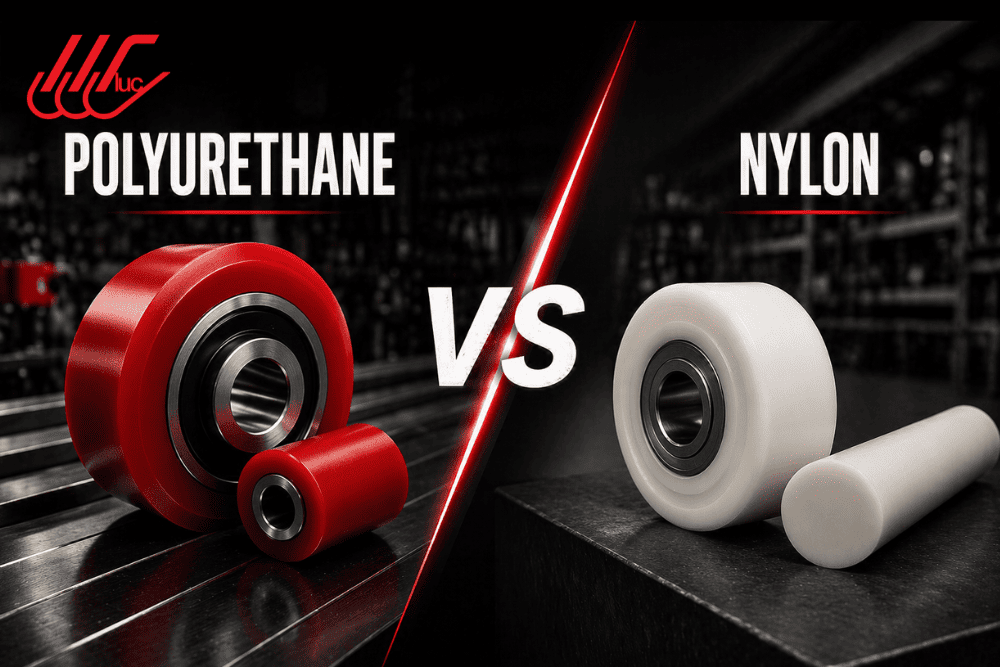
Quick Summary
- Polyurethane and polyamide (commonly known as Nylon) are both widely used in industrial wheels and rollers.
- Polyamide offers high rigidity and load-bearing capacity.
- Polyurethane combines durability, wear resistance and elasticity.
- The best material depends on the application, operating conditions and performance requirements.
- LUC Group selects materials based on the functional requirements of the application rather than a one-size-fits-all approach.
Polyurethane vs Nylon: Understanding the Difference
When selecting materials for industrial wheels, rollers and other wear components, polyurethane and polyamide (commonly known as Nylon)are two of the most common options.
Both materials are used in demanding industrial environments, but they offer different performance characteristics and are therefore suited to different applications.
Choosing the right material can have a significant impact on performance, maintenance requirements, downtime and component lifetime.
What Is Polyurethane?
Polyurethane is an elastomer that combines the elasticity of rubber with the strength of engineering plastics.
One of the key advantages of polyurethane is the broad range of material properties that can be achieved. Polyurethane materials can be produced in hardnesses ranging from very soft elastomers up to approximately 75 Shore D, approaching the hardness of polyamide. Unlike polyamide, however, polyurethane retains its elastic properties even at higher hardness levels.
Depending on the formulation, polyurethane can be engineered to provide:
- High wear resistance
- High load-bearing capacity
- Low rolling resistance
- Impact resistance
- Vibration damping
- Excellent durability under dynamic loads
- High hardness/stiffness
LUC Group offers more than 500 polyurethane material grades, allowing solutions to be tailored to specific operating conditions and performance requirements.
What Is Polyamide?
Polyamide (commonly known under the trade name Nylon) is a rigid engineering plastic known for:
- High strength
- Excellent compressive strength
- High stiffness
- Good chemical resistance
- Low friction properties
Because of its rigidity, polyamide is often selected for applications involving high static loads and environments where durability and cost-efficiency are important considerations.
Key Differences Between Polyurethane and Polyamide
| Property | Polyurethane | Polyamide |
|---|---|---|
Wear resistance |
Very high |
High |
Impact Resistance |
Excellent |
Moderate |
Vibration Damping |
Excellent |
Limited |
Noise Reduction |
Excellent |
Low |
Load Capacity |
High |
Very high |
Rolling Resistance |
Low |
Very low |
High friction |
Possible |
Not possible |
Floor Protection |
Excellent |
Low |
Customisation Options |
Highly customizable |
More limited |
Dynamic Performance |
Excellent |
Good |
Note: Both polyurethane and polyamide are available in different grades and formulations. Performance depends on the specific material selected and the application requirements.

When Is Polyurethane the Better Choice?
Polyurethane is often preferred when:
- Wear resistance is critical
- Noise reduction is important
- Vibration damping is required
- Floor protection matters
- Dynamic loads are present
- Operating conditions vary significantly
- High impact loads occur
- Specific friction is required
Polyurethane wheels and rollers are widely used in applications such as:
- Logistics and transport systems
- Roller coaster wheels
- Steel and aluminium processing
- Offshore installation equipment
- Plastic and fiberglass processing
These applications often benefit from polyurethane’s combination of elasticity, durability and resistance to wear.
Applications Where Polyamide Is Commonly Used
Polyamide can be a good choice when:
- Maximum rigidity is required
- Static loads are very high
- Noise and vibration are not critical concerns
- Cost is a key factor
Polyamide is commonly used in industrial environments where a hard, rigid material is preferred and where cushioning or vibration damping is less important.
Why Application Requirements Matter
Neither polyurethane nor polyamide is universally better.
The right choice depends on factors such as:
- (Impact) load
- Speed
- Temperature
- Friction conditions
- Environmental exposure
- Noise requirements
- Expected component lifetime
- Cost
The combination of these factors determines which material is most suitable for the application.
How LUC Group Selects the Right Material
At LUC Group, material selection is based on the specific requirements of the application.
Our engineers evaluate:
- Functional requirements
- Operating conditions
- Load and speed
- Dynamic behaviour
- Wear expectations
- Total Cost of Ownership
Based on this analysis, the most appropriate polyurethane material can be selected from more than 500 available grades.
Which Material Is Right for Your Application?
Polyurethane and polyamide both offer valuable advantages in industrial applications.
Polyamide excels in rigidity and load-bearing capacity, while polyurethane provides superior impact load resistance, vibration and noise damping and flexibility.
Rather than choosing one material based solely on specifications, the best results are achieved when the material is selected according to the specific application and operating conditions.
LUC Group supports customers in evaluating application requirements and selecting the optimal polyurethane solution for long-term performance and reliability.